
The Bad Dog Sign Defense in Florida Dog Bite Cases
Florida imposes strict liability on dog owners whose dogs bite someone who is lawfully on the property or in a public place. That means a first-time bite can still result in full liability, regardless of whether the owner had any prior reason to believe their dog was dangerous.
However, Florida’s dog bite statute creates one specific exception tied to a warning sign. If a dog owner has prominently posted a sign that adequately warns visitors of the dog’s presence, the law may reduce or eliminate the owner’s liability in certain circumstances. This is commonly known as the Bad Dog sign defense, and understanding how it works, and how it can fail, is important for any Florida dog or property owner. For a full overview of available defenses, see our post on defending against dog bite lawsuits in Florida.
How Florida’s Dog Bite Statute Creates the Opening for This Defense
Under Florida Statute 767.04, a dog owner is liable for damages suffered by any person who is bitten by the dog while in a public place or lawfully on private property. The strict liability standard means the plaintiff does not need to prove the owner knew the dog was dangerous.
The statute includes a carve-out, though. An owner who prominently displays a sign that includes the words “Bad Dog” is not liable to a person bitten on the premises, unless the victim is under six years old or the owner’s negligence contributed to the bite. In effect, the sign shifts responsibility to the person who chose to proceed despite a clear warning.
This defense reflects a common-sense principle embedded in Florida law: if you adequately warn someone of a risk and they proceed anyway, you have reduced your legal responsibility for the consequences.
The Legal Requirements for the Defense to Apply
Prominence and Visibility
The sign must be prominently displayed, meaning it has to be in a location where it is clearly visible to someone approaching the property. A sign hidden behind overgrown bushes, posted on an interior wall, or placed only at one entry point when there are multiple does not satisfy this requirement.
Courts look at whether a reasonable person approaching the property would have seen and understood the warning before coming into contact with the dog. Property owners defending a bite claim should be prepared to demonstrate where the sign was placed and why that placement was adequate.
Does the Sign Have to Say “Bad Dog” Exactly?
The statute specifically references the phrase “Bad Dog,” but courts in Florida have taken a practical approach to warning signs more broadly. A sign that does not use those exact words but clearly communicates the presence of a dangerous dog can still be relevant to the defense, particularly in evaluating comparative fault.
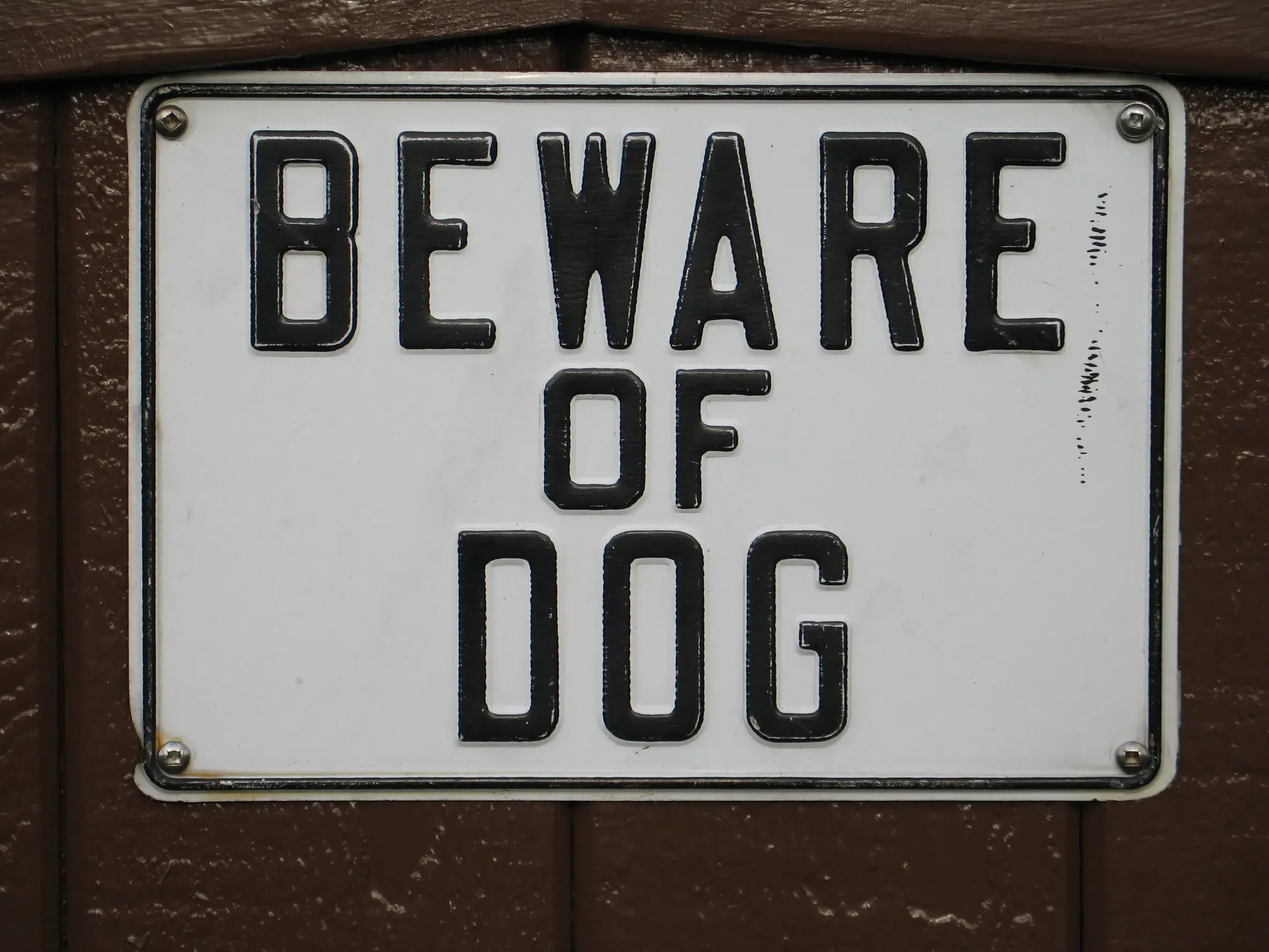
For example, signs reading “Beware of Dog” or “Dog on Premises” may not satisfy the statutory exception literally, but they can still be introduced as evidence that the visitor was on notice of a risk. How much weight a court gives to non-statutory signage depends on the language used, the placement, and the specific facts of the incident.
If you want the full statutory protection, “Bad Dog” is the phrase to use. Supplementing it with other warning signs at multiple entry points adds additional layers of documentation.
Where the Defense Has Limits
Children Under Six Years Old
The statute specifically removes the Bad Dog sign defense when the person bitten is under six years of age. Florida law recognizes that young children cannot meaningfully read or process a warning sign in the same way an adult can. If a child six or younger is bitten, the owner cannot rely on signage to avoid liability, even if the sign was properly posted.
This is an important limitation for families with dogs who have visitors with young children. The sign defense does not provide the same protection in those scenarios, and other precautions, such as separating the dog from young visitors, become more important.
Owner Negligence
The statutory protection also disappears if the dog owner’s own negligence contributed to the bite. Posting a Bad Dog sign does not give an owner license to be careless. If the dog was negligently restrained, if the owner let the dog approach a visitor in a threatening way, or if some other failure by the owner created the conditions for the bite, the sign defense will not shield the owner from liability.
This means the sign is most effective when combined with genuinely responsible dog management, not as a substitute for it.
Invited Guests and Business Visitors
Florida courts have also considered the relationship between the person bitten and the property owner. An explicit invitation to enter the property, particularly one that does not acknowledge the dog’s presence or the risk it poses, can complicate the defense. If an owner invites someone onto their property and that invitation implicitly overrides the warning on the sign, the defense may be weakened.
Best Practices for Property and Dog Owners
If you have a dog and want to take advantage of the Bad Dog sign defense in the event of a bite claim, the most effective approach combines proper signage with documentation and responsible ownership.
- Post the sign at every entry point to your property, including gates, fences, and any area where someone might approach from a sidewalk or neighboring yard.
- Use signs that include the words “Bad Dog” to satisfy the statutory language precisely. You may also use supplemental signs at additional locations.
- Check the sign regularly to make sure it remains visible, legible, and securely in place. A faded, fallen, or obscured sign provides limited protection.
- Photograph the sign and its placement periodically. Dated photographs showing the sign in position can be critical evidence if a bite claim arises months or years later.
- Keep the receipt from when you purchased the sign, along with any records of when it was installed. These documents help establish that the sign was in place before the incident occurred.
Understanding your homeowners insurance coverage for dog bite incidents is also worth doing before a claim arises. Some policies are affected by the presence or absence of warning signs, and knowing your coverage in advance helps you respond more effectively if a bite occurs.
How the Bad Dog Sign Defense Fits Into Your Overall Strategy
The Bad Dog sign defense is one of several tools available to Florida dog owners facing a bite claim. It works best in combination with other defenses, such as evidence that the injured person provoked the dog or was trespassing at the time of the bite. Our post on the victim negligence and provocation defense in Florida covers those arguments in depth.
If you have already been served with a lawsuit, the time to act is now. Our guide on what to do after receiving a dog bite summons in Florida walks through the immediate steps and the 20-day response deadline.
Contact Florida Civil Counsel, P.A.
Whether you are facing a dog bite claim or want to understand your legal exposure before one arises, Florida Civil Counsel, P.A. can help. Our team represents dog and property owners throughout Florida, including in Orlando, Tampa, Jacksonville, and Miami, and understands how to build effective defenses under Florida’s strict liability framework.
Contact us today to speak with a Florida dog bite defense attorney about your situation.